What you'll learn
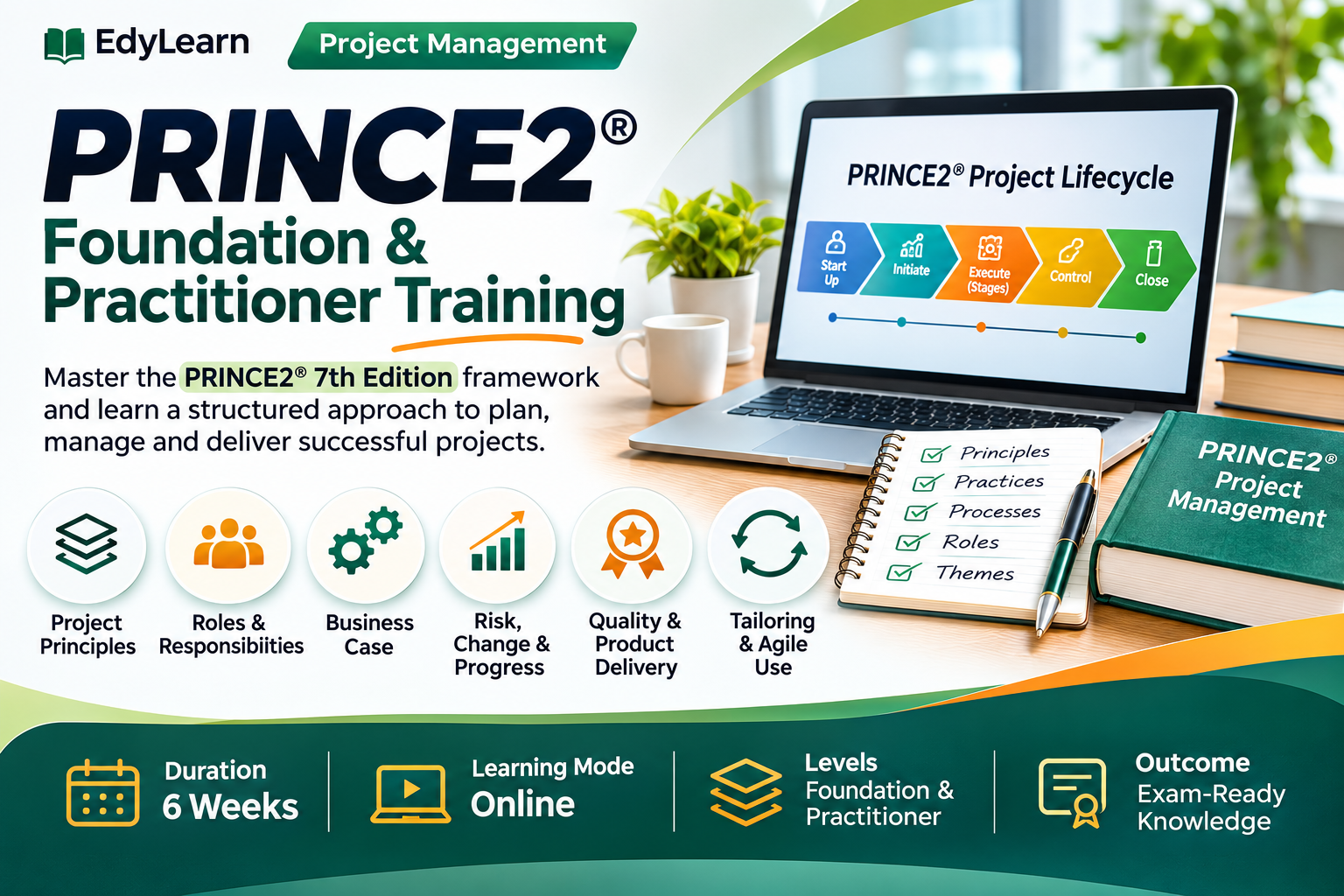
Learn how to structure, manage and deliver projects using the PRINCE2®
7th Edition methodology. This course introduces the framework's
principles, practices and processes, helping you understand how to
organize project responsibilities, maintain business justification
and keep delivery under control.
The learning journey covers both Foundation-level knowledge and
Practitioner-focused application. You will explore how PRINCE2
concepts work together across different project environments, from
initial planning and risk assessment to stage management, product
delivery and formal project closure.
- Understand the PRINCE2® 7 framework and its structure.
- Apply the seven project management principles.
- Recognize project roles, responsibilities and team relationships.
- Develop and maintain a project Business Case.
- Understand product-based planning and quality management.
- Plan project stages, activities and resources.
- Identify, assess and respond to project risks.
- Manage issues, changes and configuration information.
- Monitor project progress against agreed tolerances.
- Manage stage boundaries and project closure.
- Adapt PRINCE2 practices to different project settings.
- Explore scenario-based project decisions for Practitioner-level application.
Whether you are already involved in project delivery or preparing
to take on greater project responsibilities, this learning path
helps you build a structured understanding of project governance,
coordination and controlled delivery.
Show More
Course Overview
The PRINCE2® 7 learning path moves from the fundamentals of the
methodology to its practical use in managing projects. It explores
the framework's principles, people, practices and processes, followed
by integrated application and certification readiness.
Learning Modules
Get familiar with PRINCE2® 7 and understand why organizations use a structured project management method. Explore the framework's core components and the principles that guide project decisions.
- Introduction to PRINCE2® 7 and its purpose
- Framework structure: principles, practices and processes
- Continued business justification
- Learning from project experience
- Defined roles and responsibilities
- Managing by stages and by exception
- Product focus and tailoring the method
Examine the human and business aspects of project management. Learn how teams collaborate, how project structures are established and how business value is assessed throughout a project.
- Leadership, teamwork and stakeholder engagement
- Communication and collaboration in project environments
- Behavioural aspects of project management
- Project management team structure
- Roles, responsibilities and organizational relationships
- Business justification and benefits management
- Maintaining the Business Case
Understand how project requirements are translated into manageable plans and deliverables. This module covers product definition, quality expectations, planning levels and the coordination of project work.
- Product-based planning concepts
- Product descriptions and work packages
- Quality planning and quality control
- Project, stage and team-level planning
- Estimation and scheduling techniques
- Setting tolerances and project controls
- Team Manager responsibilities and product delivery
Explore the controls that help project teams respond to uncertainty and maintain delivery discipline. Learn to identify risks, assess changes and track performance against agreed plans.
- Establishing a risk management approach
- Risk identification, assessment and response planning
- Risk ownership and escalation
- Issue and change control
- Configuration management
- Impact analysis and decision-making
- Progress monitoring and reporting
- Managing by exception and project-level control
Study how a project moves from an initial idea into an authorized and controlled initiative. Understand the activities involved in preparing, directing and starting project work.
- Starting up a project
- Project initiation and authorization
- Establishing project controls and management approaches
- Directing project decisions
- Delegation, accountability and escalation
- Authorizing project stages and activities
Learn how project work is coordinated during execution and how management teams review progress before moving into the next stage.
- Controlling a stage
- Managing product delivery
- Work execution and team coordination
- Quality checks and product acceptance
- End-stage assessment
- Updating project plans and the Business Case
- Authorization of the next stage
Understand the steps involved in completing a project responsibly and adapting the methodology to suit different organizational and delivery environments.
- Formal project closure
- Product acceptance and handover
- Benefits review planning
- Tailoring for project size, complexity and risk
- Using PRINCE2 in Agile and hybrid environments
- Considering organizational context
Bring together the concepts covered throughout the learning path. Explore project scenarios and review the knowledge areas relevant to Foundation and Practitioner certification examinations.
- Combining principles, practices and processes
- Scenario-based project decision-making
- End-to-end project walkthrough
- PRINCE2 Foundation exam overview
- PRINCE2 Practitioner exam overview
- Exam techniques and practice scenarios


 Learn New Skills. Build Your Future With EdyLearn.


 Project Management